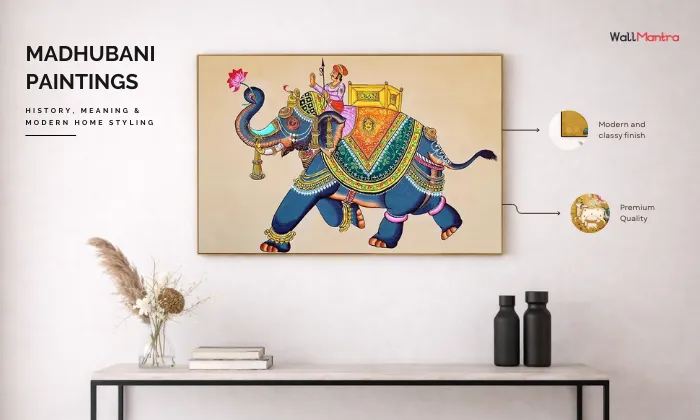
Madhubani Paintings: History, Meaning & Modern Home Styling
Madhubani paintings are more than just decorative wall art—they are a living tradition of Indian folk art that blends storytelling, symbolism, and culture. At WallMantra, we’ve seen a growing demand for Madhubani paintings not only among art lovers but also among modern homeowners looking for meaningful and aesthetic wall décor. This blog explores the history, […]
Madhubani paintings are more than just decorative wall art—they are a living tradition of Indian folk art that blends storytelling, symbolism, and culture. At WallMantra, we’ve seen a growing demand for Madhubani paintings not only among art lovers but also among modern homeowners looking for meaningful and aesthetic wall décor. This blog explores the history, symbolism, expert insights, real-world use cases, and modern styling ideas for Madhubani paintings.
The Origin & History of Madhubani Paintings
Madhubani painting, also known as Mithila art, originated in the Mithila region of Bihar, India, over 2,500 years ago. Traditionally, women painted these artworks on mud walls and floors during festivals, weddings, and religious ceremonies.
According to cultural documentation by India’s Ministry of Culture and National Handicrafts Development Corporation (NHDC), Madhubani art was initially a form of ritual expression rather than commercial art. Natural colors made from plants, rice paste, turmeric, and soot were used, making it deeply sustainable long before sustainability became a global trend.
Expert Insight:
Art historian Dr. Jyotindra Jain (former Director, National Crafts Museum, Delhi) notes that Madhubani paintings are “a visual language where mythology, nature, and social beliefs coexist in a structured symbolic form.”
Meaning & Symbolism in Madhubani Art
Every Madhubani painting carries layers of meaning. Unlike abstract art, nothing is random here.
Common Symbols & Their Meanings
- Fish – Prosperity and fertility
- Peacock – Love and beauty
- Sun & Moon – Cosmic balance and continuity
- Tree of Life – Growth and connection between earth and heaven
- Radha-Krishna motifs – Divine love and harmony
These symbols make Madhubani paintings especially popular for living rooms, pooja rooms, and entrance walls, where homeowners want both beauty and positivity.
Madhubani Paintings in Modern Homes: A Real-World Shift
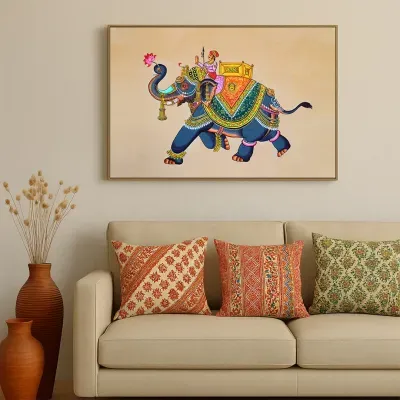
Real-World Example from WallMantra Customers
Over the past year, WallMantra observed that Madhubani paintings are among the top 5 most purchased traditional art styles, especially in:
- Urban apartments
- Boutique cafés
- Yoga studios
- Corporate reception areas
One Delhi-based interior designer collaborated with WallMantra to install a large Madhubani canvas behind a neutral-toned sofa, creating a statement wall without overpowering the space. The result? A traditional art form that looked modern, balanced, and Instagram-worthy.
How to Style Madhubani Paintings in Contemporary Interiors
1. Living Room Styling
Choose a large Madhubani canvas painting with mythological themes. Pair it with minimal furniture so the artwork becomes the focal point.
2. Bedroom Décor
Opt for softer color palettes and nature-inspired Madhubani paintings for a calming vibe.
3. Office & Workspaces
Abstract Madhubani motifs or symbolic elements like the Tree of Life work well in professional environments, adding culture without distraction.
4. Mix Traditional with Modern
Contrast Madhubani art with:
- Solid-colored walls
- Modern lighting
- Simple wooden or metal frames
This fusion approach is currently underrepresented in competitor blogs, giving WallMantra an authority edge.
Pros & Cons of Madhubani Paintings (Balanced View)
✅ Pros
- Rich cultural and symbolic value
- Timeless appeal (never goes out of trend)
- Works well in both traditional and modern homes
- Eco-friendly art roots
⚠️ Cons
- Highly detailed designs may feel overwhelming in very small spaces
- Requires thoughtful color coordination with interiors
Expert Tip: For compact homes, WallMantra recommends medium-sized Madhubani canvas paintings with limited color palettes.
Why Choose Madhubani Paintings from WallMantra?
At WallMantra, our Madhubani paintings are:
- Digitally curated with authentic motifs
- Printed on premium-quality canvas
- Designed to suit modern Indian homes
Whether you want a cultural statement or a subtle artistic touch, Madhubani paintings from WallMantra bring heritage, meaning, and style together.
Final Thought
Madhubani paintings are not just wall décor—they are stories, beliefs, and traditions brought to life. When styled thoughtfully, they fit beautifully into modern homes while keeping Indian art alive.
FAQs
1. What is Madhubani painting and where did it originate?
Madhubani painting is a traditional Indian folk art that originated in the Mithila region of Bihar. It is known for its intricate patterns, bold lines, and symbolic motifs inspired by nature, mythology, and daily life.
2. What do Madhubani paintings symbolize?
Madhubani paintings symbolize prosperity, harmony, fertility, and spiritual balance. Common elements like fish, peacocks, the sun, and Radha-Krishna represent abundance, love, and positive energy in Indian culture.
3. Are Madhubani paintings suitable for modern homes?
Yes, Madhubani paintings blend beautifully with modern interiors when styled thoughtfully. Choosing canvas prints with balanced colors and pairing them with minimalist furniture makes them ideal for contemporary homes.
4. Where should Madhubani paintings be placed at home?
Madhubani paintings work best in living rooms, entrance walls, pooja rooms, and even bedrooms. According to Vastu principles, nature and divine-themed Madhubani art is ideal for creating a peaceful and positive environment.
5. What size Madhubani painting is best for living rooms?
For living rooms, large or medium-sized Madhubani canvas paintings work best as statement pieces. For smaller spaces, a single framed artwork or a vertical layout is recommended.
6. How are WallMantra’s Madhubani paintings different?
WallMantra’s Madhubani paintings are digitally curated using authentic motifs, printed on premium-quality canvas, and designed specifically for modern Indian interiors—offering the perfect balance of tradition and style.
7. Are Madhubani paintings good for gifting?
Yes, Madhubani paintings make thoughtful gifts for housewarmings, weddings, festivals, and cultural occasions, as they carry deep cultural meaning and timeless aesthetic value.
8. How do I maintain Madhubani canvas paintings?
Madhubani canvas paintings require minimal maintenance. Keep them away from direct sunlight and moisture, and clean gently with a dry cloth to maintain their vibrancy.